
What is the nervous system and why should you care if yours is regulated?
Whew… Where’s the pressure release valve? From climate crisis to rising fascism, our world is becoming increasingly complex and stressful in ways that we feel directly in our sensitive, intelligent minds and bodies. With so much beyond our control, it’s easy to feel overwhelmed and exhausted. However, so much of how we experience reality, whether in the form of our thoughts, or sensations in the body, depends on our nervous system. We can cultivate regulation in our nervous system through accessible, simple practices, which hugely impact on how we feel, think, and experience life.
Nervous system regulation helps us feel less pain and anxiety, sleep and rest better, feel mentally clear and allows us to experience healthy pleasure, connection, and safety. This in turn can help us feel more agency, and empowered when facing a quickly changing and unstable world.
Skillful yoga practice is one of the best tools for nurturing nervous system regulation.

What’s the Nervous System?
The nervous system communicates messages between the brain and the rest of the body.
There are two main subdivisions: the central nervous system and peripheral nervous system. The CNS includes the brain and spinal cord, poetically described by Guruiji BKS Iyengar as an inverted tree, with the roots in the brain, and the branches spreading down through the body. It integrates incoming sensory input and responds. The PNS includes sensory and motor receptors; the motor division includes the voluntary, or somatic, and the involuntary/ autonomic nervous system. Here, parasympathetic and sympathetic modes function as a two ends of a spectrum.
The nervous system defaults to the known, but is also highly adaptive.

Wellness relates to balance between sympathetic and parasympathetic.
The sympathetic nervous system causes being awake, taking action. The sympathetic nervous system controls a whole host of wonderful things without us thinking about it – heart rate, blood pressure, digestion, and more. Centered in the adrenal glands, which kick on during stress/danger; it gives us a burst of energy to fight or flight to safety. However, the brain can’t discern real danger from imagined, and in our modern world of abundant stimulation, screens, stress, and trauma, the sympathetic nervous system is often overactive, which causes anxiety, insomnia, and increased cortisol (fear hormone) which deteriorates the body. When responding to danger, biological replenish/repair cycles are paused.
The parasympathetic nervous system, or “rest and digest” mode, brings relaxation, rest, safety. Cellular respiration increases; the higher levels of CO2 in the bloodstream in turn calm the brain. Generally, most folks benefit from practices that increase the parasympathetic response. However, too much parasympathetic is also problematic. This can look like dissociation, freeze or fawn response, or depression.
Think of a pendulum swinging back and forth: we want a smooth, steady combination of sympathetic and parasympathetic response. This helps us feel alert and energized, yet restful and relaxed.

Dysregulation shows up as:
- anxiety
- depression
- insomnia
- overwhelming emotions
- inflammation and physical pain
- feeling chronically unsafe, which weakens our discernment around who or what is actually dangerous
- distorted thinking
- gender dysphoria
- dissociation, being out of body

Regulation helps with hormonal balance, digestion, immune health, and every vital system in our body. Because bodies seek balance, if there’s one extreme, the pendulum will often swing in the other direction too: people with anxiety often also have depression.
The goal is to reach a place of regulation: a harmonious, sattvic state between sympathetic and parasympathetic function.
Nervous system regulation isn’t a quick fix; it’s more like a garden that needs ongoing nurturance and tending. Many aspects of yoga involve simultaneously stimulating and calming our nervous system; this intelligent approach is much more helpful than thinking of regulation as a binary of “uppers” and “downers.”
Gaining fluency in how to regulate your nervous system is a key component for how yoga works as an effective healing modality. When we work at the level of the nervous system, yoga effectively disrupts body-brain patterns, disarms trauma and epigenetic survival mechanisms, and frees us from internalized social conditioning: personal and collective samskaras (karmic patterns).
Consistent yoga practice can be very effective, when practiced in specific ways.
Asana offers a myriad of ways to regulate. And, yoga “off the mat” includes additional ways to tend the garden of a balanced, regulated nervous system. Below I go a bit deeper into 5 key ways of working, but here’s a quick list of ways yoga can help:
- feeling sensations
- observing multiple different sensations at once
- breath awareness: feeling passive, effortless breath in the body
- increasing back body breath and thus adrenal circulation to pacify the sympathetic nervous system
- extending one part of the body actively, while simultaneously relaxing another area; extra credit for feeling both at one time
- feel your body in contact with the floor, wall, or a prop
- deliberately moving awareness to various things in and around you
- softening your tongue, jaw, belly, pelvic floor
You can do the above in asana, and throughout the day. Here’s some additional “off the mat” ways to help. These won’t work for everyone; see what works for you:
- create routine and regularity with when you eat and sleep
- reduce or take delibrate “fasts” from screens
- seeting boundaries and honoring them
- time in nature, being present with nature
- asking for support
- interupt small harms, such as being misgendered
- gardening, pruning, physical work with plants
- imaginative play, crafts, or story telling games with kids (or inner children)
- creative art or expression that prioritizes process over product
- schedule gaps between events, meetings
Passive restorative poses may be too confrontational and agitating if someone with a trauma history is trying to relax. Standing poses against a wall can be grounding and help people orient in space, especially good if disassociation is present.
There are particular poses and breath techniques that help, but HOW you practice is just as important as what you practice.

Here are five ways to work in yoga asana that can lead to subtle but powerful shifts in your nervous system:
1. Notice sensations in your body. Practicing yoga asana can be a path to get you into your body and out of your head. Notice how sensations change over time. Spread awareness to feel two different sensations at the same time – for instance, sense your thigh muscles working and at the same time relax your jaw.
Embodiment is powerful, particularly when two key components are in place. First, it helps to have clear, direct, doable instructions. There’s a trend in trauma informed yoga now to emphasize permission, and “doing whatever feels good.” However, if someone is out of their body or anxious, too much choice can create more anxiety, and make you feel stuck in your head, unsure of what to do.
It can be supportive and calming for a teacher to give direct instruction. But, secondly, it is also important to be in a space that uplifts one’s agency, in which you know you have permission to opt out. It’s important to consent to being led in any given asana. Classes that are too strict can exacerbate nervous system patterns signaling a sense of powerlessness. Strictness can inspire rigor, alertness and actually, care when used skillfully. But some teachers overdo it, and it feels like an environment of shame and assimilation. However, it’s unhelpful if things are too permissive and casual.
The right combination of discipline, compassion, agency can build trust and create conditions where a teacher can help the student break free form old patterns in how they move and think, which is very healing on the level of the nervous system. Explore different teachers and methods to find what works for you.
- Be aware of your breath. Learn to feel the breath in your body. Just noticing your breath as it is without trying to change it sends a powerful message to the nervous system that you are safe. Full, free breathing is one of the best things you can do to regulate your nervous system. Alignment-based asana restructures the body, removing obstacles to the breath and allowing you to breathe better.
Importantly, I’m talking about bringing attention to your breath in the context of yoga poses, rather than doing breathwork (pranayama). The breath has a very powerful effect on how we feel, but because of this power, it’s a bit like playing with fire. If you’re unskillful or aggressive in an asana, you might strain a muscle. But if you are aggressive or unskillful in working with breath, you might stir up a lot of psychological suffering.
Working with the body is a relatively safe and accessible way to feel better. And it can prepare you to safely explore beautiful healing practices such as pranayama.
3. Realign your body.
Alignment-based asana can decompress your spine, unload the nerves and vessels, soften the organs, create more space for the lungs and diaphragm, increase circulation to the organs and brain, and more. An attention to alignment will also help you protect your joints and increase your stability in asana.
And while functional alignment is great for reducing pain and injury in the physical the body, it is also the key to shifting the patterns in our emotions and mind. Alignment reorganizes how energy moves through the nervous system. This reorganization of energy is how asana can tangibly change the patterns to create new possibilities not only in your body, but also your mind. As we learn to be “in” our bodies, we increase our ability and capacity to feel safe.
4. Balance your hormones. The endocrine system (hormones) and nervous system are deeply entwined. For example, in response to stress, the nervous system will kick into fight, flight, or freeze in the immediate moment, while the endocrine system will release cortisol, which will affect the body for longer.
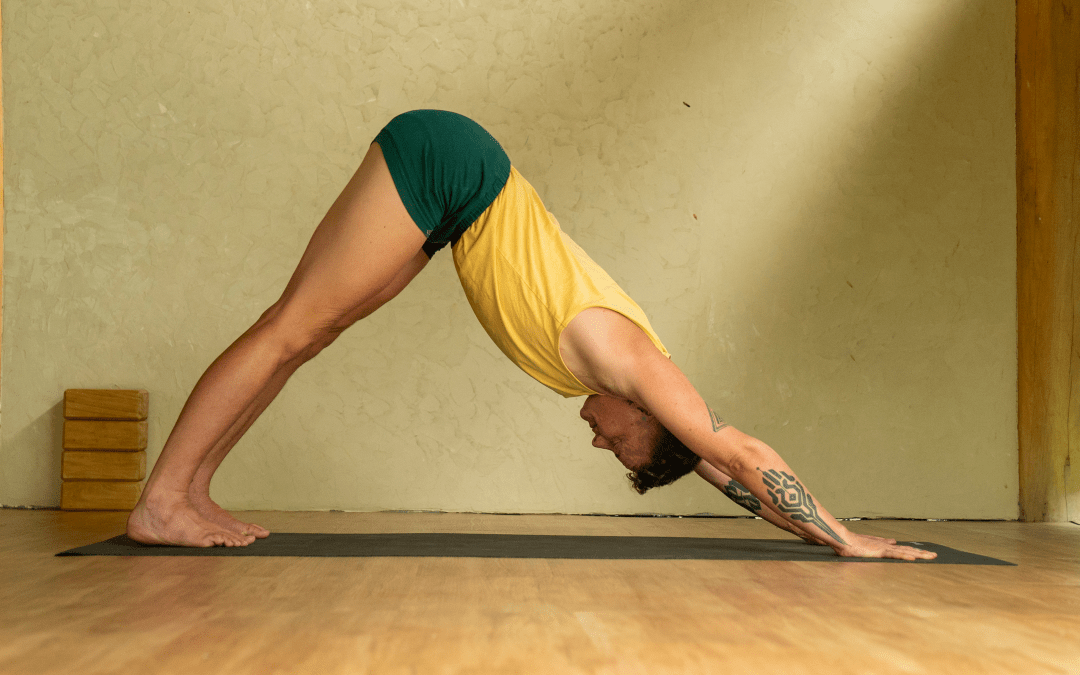
Certain asana help to powerfully and effectively regulate hormones. Not only can specific poses stimulate or calm hormone-producing glands, but a daily practice can over time reduce the production of stress hormones. To calm the sympathetic, supported forward extensions like uttansana and ado mukha virasana are quieting, especially with head support, so the brain, eyes, and temples can soften.
Chest openings for easier diaphragmatic movement and breath, such as supta baddha konasana (below), can be powerfully calming.

Halasana with a bench or chair supporting the root of the thighs is one of the best parasympathetic inducing poses. Any sarvangasana variation is excellent, but this is especially restful: the combination of backbody breath, jalandhara bandha position, circulation to the brain, and restful, passive decompression creates a very soothing effect. Emphasis on softening the jaw, tongue, eyes, brain with exhalation helps connect to consciously letting go.
5 Observe with distance. Learn to be the “seer, not the seen.” Patanjali’s Yoga Sutras describe how we tend to identify with what we are seeing, thinking, or feeling, and through that process, get enmeshed with our experiences. Embodied yoga practice can help us connect to a deeper part of ourselves – the source of awareness. We can learn to create space between ourselves and our thoughts and emotions. We can experience them, but know that they are not us. This shift in perspective increases our capacity both to stay grounded and patient during discomfort and to be intimately present during moments of healthy pleasure and delight, which strengthens our resilience.
This distance can paradoxically also help us feel our feelings! In life, most of us tend to avoid ‘bad’ feelings, but this avoidance can trap unprocessed events within ourselves, leading the nervous system to enact the same patterns over and over.
Through yoga practice, we are able to integrate and metabolize uncomfortable feelings such as grief and pain, and through that process, shift and release them.
This process of somatic integration frees us to be more attuned and responsive to what’s happening within and around us, and ultimately, more happy, healthy, and secure.

Interested in experiencing how yoga can help you access nervous system regulation?
2 warm invitations:
Join us this April for a week long Yoga Retreat centering nervous system regualtion in a myriad of ways! Yoga, rest, community, play, crerative experession, and more.
SPRING YOGA RESET RETREAT
with Avery and Luke
Mazunte, on the Oaxacan coast of Mexico
APRIL 6-12, 2025
Check out all the juicy details here.
Come to class! Join a zoom yoga class or on demand practice with Avery. Your first class is FREE!
You can filter on demand classes by searching for “nervous system regulation” in my on demand library.

About the Author:
Avery Kalapa (they, them) CIYT ERTYT500 YACEP is a trans yoga teacher with over 25 years experience in yoga. They run a thriving, online Yoga School called Sadhana Support Collective that offers awesome classes and inclusive healing community. Drop into class, first one’s free!
I love, love, love this article. Thank you for tying all the pieces together into THIS!
I have been coming to understand this big picture slowly through my year of training with you and it really has been such an empowering gift you have brought into my life.
Highly recommend all of the offerings listed above.
So good, I feel like I’m getting away with something.
Oh ya, I am, it’s my soul.
Grateful to have you here, and be in sangha with you.