6 Reasons to Come to Yoga as the US Starts a War :(

6 Reasons to Come to Yoga as the US Starts a War :(

Photo of terrifying destruction in Iran caused by the US.

Signs of spring wink and smile at me in harsh contrast to the anger and heartbreak I feel, grappling with the reality of the US instigating war in Iran, domino effecting so much unfolding violence. I’m heartbroken, devastated, and so mad. This has come on top of so much else (eclipse week hiii!)… it’s just so much to hold.

When chaos hits the fan, I’m especially grateful for yoga, but also for rad, sweet yoga community – for the solidarity and support that happens when people like us gather to practice together.

Saturday I felt really fractured as I started class, but being able to show up with my grief and fear, no grand analysis or answers, but to come together for practice and be able to be real – that was quenching for some inner thirst. We need relationships and spaces like that, where we can show up unmasked, honest, and turn towards the suffering in our selves and the world with presence and kindness together, alongside others.

Some yoga spaces keep to an (often unsaid) rule to not bring the ‘political’ into the space. I am glad to the co-creating sangha space with you, where we can acknowledge what’s raw, what’s up, knowing we are not separate from the conditions we are in.

We are in this mess together, and so we are part of the solutions, together.

It’s been strengthening this week to log on to the zoom for yoga, and have a shared space to face it together, talk some, breathe, feel the feelings, re-root, and break the spell of feeling alone in it all.

 When something ‘works’ I like to get curious, reverse engineer it, find some breadcrumbs to follow next time I’m lost in the dark. I’ve gathered a few to share with you:

Here’s 6 reasons to

COME TO YOGA…

…ideally, with me, and soon! during these intense times. 

1. Remembering Our Power

Yoga’s tools were forged to help us meet moments like these. Perhaps our souls too, are alive in these times on purpose. Here to hold the line, turn towards suffering with compassion and solidarity, here to fight the good fight.

Like Arjuna gazing out to the battlefield, we know to not act is also an action; all our actions have consequences. Let this be a reminder that we always, as long as we are alive, have power, and that how we live life is influencing the future. Our thoughts, words actions are seeds planted. May we find courage in that we are continuing to build towards a better future, take care of our selves and each other, no matter what.

On the level of the nervous system, functional asana directly allows us to rewire our patterns. This means, more agency, less fear-based autopilot. Yoga is literally a practice of staying grounded and present so that you can respond instead of reactto what arises with love and skill.

Asana is a way to reclaim our power, to re-center, sharpen the blade of our mind, soften our heart, and do the needful.

Call your reps, speak up, discern what is your offering, yours to do.

As Magi said in Fern Gully, “We all have power, and when we share it, it grows…”

Practicing asana and then feeling how much better you feel after is a psycho-somatic reminder that you can affect positive change. At a time when things can feel hopelessly out of control, reminding ourselves and each each other where we dohave power, where we can take action, can in an of itself be a nourishing, active resistance.
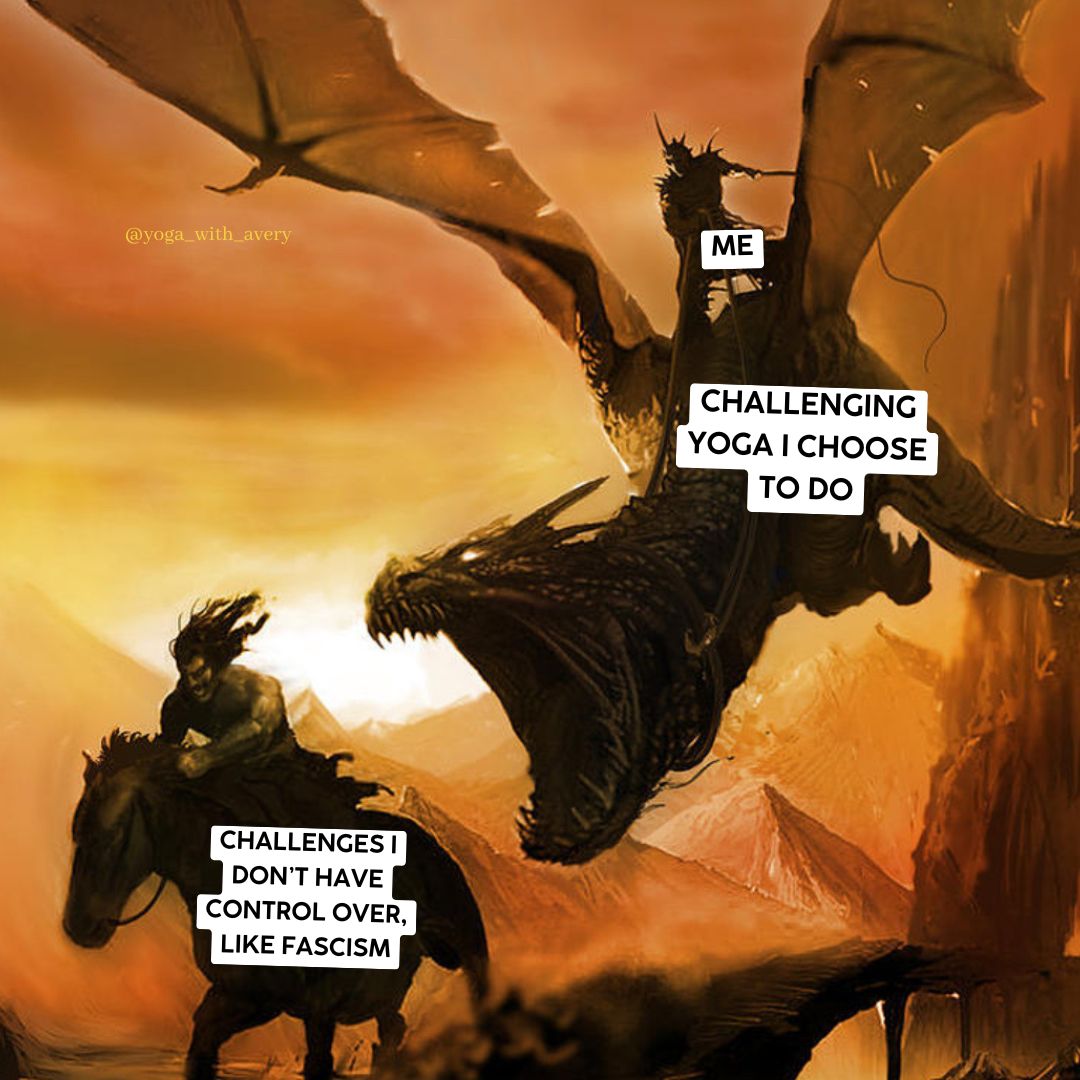
meme by Avery Kalapa about yoga resilience against fascism showing dragons and fighters<br />


2. Avoid Numbing Out, Overwhelm and Apathy: Bolster Your Capacity with Real Rest

Exhaustion may be most obvious in your body, but it affects your mind and your senses too – and these jnanendriyas have a huge effect on how you feel, and how you perceive reality. Deep, real rest for your body, mind, and emotions replenishes like nothing else – and even if you’re someone who has a hard time relaxing, you CAN access deep, healing rest with practice and the right support.

My Tuesday night Restorative classes are an amazing, accessible resource! When you give your body and mind the time to really let go, soften, and melt, it’s miraculous how much can shift. The poses, guided relaxation, and breath explorations in these classes can be life changing.

With regular practice, deep rest creates a powerful shield of protection. It re-connects you to the inner wellspring of vitality and capacity. Letting go is key to creating space for the goodness ready to emerge inside you. Practicing letting go somatically is a way to access soothing relief on the days you need it most.


3. Strength and Stability 

…fortify your inner reserves. Specifically, the joint stability we explore in every Iyengar Yoga class I teach has an immediate positive impact on your sense of being grounded, confident, secure, and able to stand tall on your own two legs.

Physical stability directly offers us emotional stability.

The people pushing for war use fear to coerce the public. By practicing asana for stability, we can stand strong against fear mongering, and have more energy to take action to disrupt harm.

Avery Kalapa, trans Iyengar Yoga teacher, demonstrating virabhadrasana 1, warrior 1, with props, teaching asana on zoom.

All types of asana can be stabilizing. Forward bends soothe your adrenal glands. Inversions drench your inner body with fresh circulation, refresh your brain and stabilize your emotions through hormonal balance. Twists cleanse away tension and free your lungs and digestive system. Chest opening is a natural antidepressant. Savasana allows you to integrate, metabolize, it creates a fresh start. These practices supercharge you, and this goodness is within reach! 

4. Anti-isolation

Practicing yoga pushes back against the energy of “divide and conquer.” Staying connected to your body helps you stay connected to life itself. When you are in your body, connected to the earth, and in the field practicing with others – even online, even on demand! – you are bathing your system in the nourishment of knowing you are not alone.

Your story is part of a much bigger story. You don’t have to carry what’s heavy alone. Our embodied presence, authenticity, action and compassion become stronger as we align with yoga’s ethics of non-violence, ahimsa, and satya, truth. Where we are connected, it’s easier to follow through on responsibilities, show up to care for our selves, close ones, activism, work for a freer world. Yoga gives you the juice to align your actions towards safety and peace in our international community as human beings, all sharing one precious planet.


yoga meme by Avery Kalapa about reclaiming power


5. Keep Your Mind Clear, Wide Perspective

Albert Einstein famously said, “no problem can be solved from the same level of consciousness that created it.” Right now is an especially good time to be clear-headed, have space for perspective, and be present to what is emerging. Attention is an also a form of power. How can we stay informed, without drowning?

Yoga offers so many ways to create space between you and your thoughts; you and the external world. Patanjali says much of our suffering comes from our tendency to loose our Self in the mind’s distortions (vrittis). When we are less entangled, we are more clear, critically discerning, understanding.

Continued to notice, interrogate injustice, and speak up. These forms of sadhana – committed practice- nourish your spirit too. Pranayama and asana cleanse our energetic channels (nadis), but ethical actions to disrupt harm and offer care are also cleansing and healing. 

Studying yoga philosophy with friends can be incredibly uplifting and open your mind to other possibilities. We have access to beautiful, practical teachings in the Yoga Sutras and other sacred texts that have been around for thousands of years before AI, attention algorithms, and the current structures that govern information and knowledge. What’s in there?! SO much cool stuff…

By building new neural pathways through somatic asana practice, mindfulness, and also by exploring new concepts of what is real, we can continue to increase our capacity to face what is happening right now while keeping a sense of long-range vision, possibility, perspective, and grounding. 


6. Long-term Resilience

Consistent yoga practice builds long-term health and resilience. These systemic problems are part of a long arc, and require long-term solutions.

I am holding a vision of you being healthy, mobile, active and effective for many, many years to come! As we nurture health in our bones, muscles, joints, nerves, vital organs, we strengthen our ability to respond, skillfully and effectively to all that life brings, for the long haul. And, it helps us find the joy along the way! Which is such good medicine, too. 

It’s hard to show up for what you care about when you’re exhausted and in pain. Tending to your body and mind with skillful yoga practice is a way to invest in all that’s good in this life. It’s a gift to everything you are connected to. 

You are a gift. You are an essential piece of this puzzle!

May you be so held, nourished, and find happiness along this winding path through it all. 


“In your discipline, if doubt comes, let it come. You do your work, and let doubt go about its work. Let’s see which one gives up first!”

– BKS Iyengar
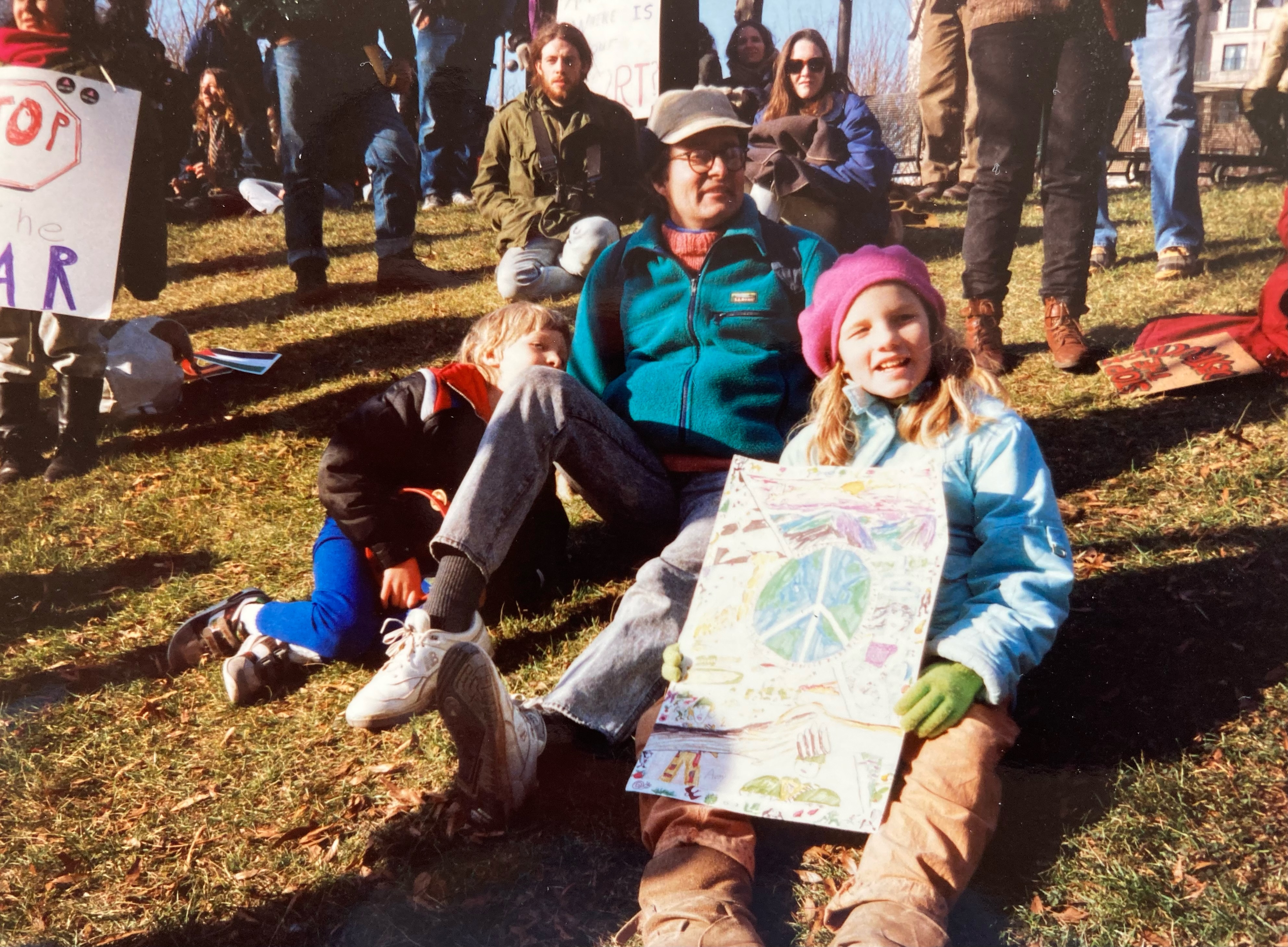
 

Photo from 1990 of Avery and their family at a "Peace in the Middle East" protest in Washington DC. We drove 5 hours from our home in West Virginia to attend.

Photo, above, from 1990 of Avery and their family at a “Peace in the Middle East” protest in Washington DC. We drove 5 hours from our home in West Virginia to attend.  

 ———

Thanks for reading. The article above was shared via my newsletter March 6th, 2026. CLICK HERE to join my newsletter. I’d love to keep in touch.

Below are some updates you may be interested in. Thanks for reading, and thank you for being here with me. I am envisioning you and everyone you love happy, peaceful, safe, and well.

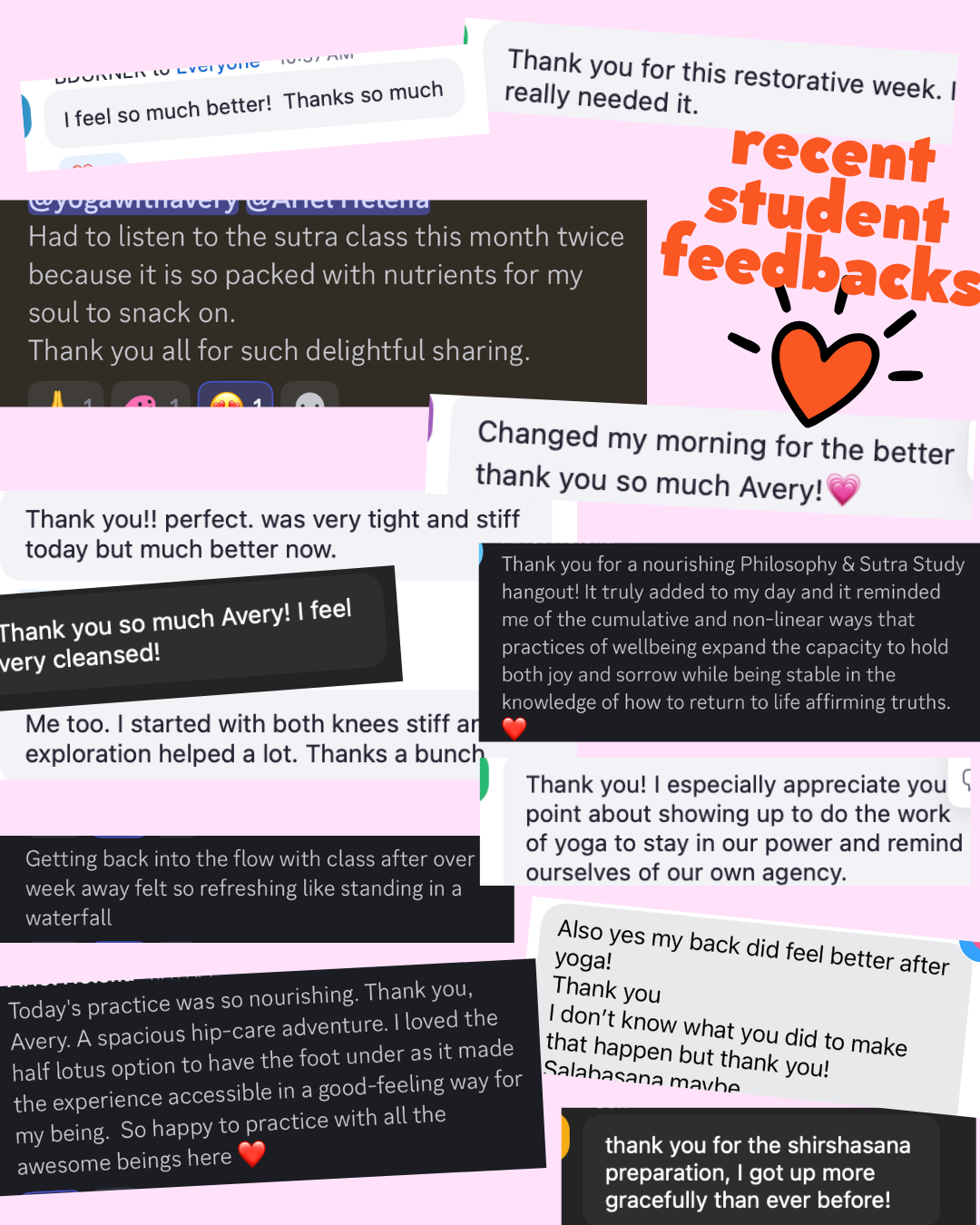
 

Updates & Opportunities


I recently read people follow through on their goals 95% more when they have an accountability buddy.

We’ve added a 2 awesome additions to Sadhana Support Collective, my online yoga membership.

If you’ve been thinking of joining or re-joining Sadhana Support, now is a great time!

In addition to unlimited livestream classes, on demand, weekly inspiration, monthly Philosophy sessions, and Yoga Q&A, SSC members can now access even more goodness, for no additional cost.

Introducing….

Sadhana Support Collective Yoga Accountability Club graphic


Yoga Accountability Club is a gentle, practical way to help you follow through on your yoga practice intentions. We follow the moon’s cycle. You can join for a single round, or for consecutive rounds. We’re currently in our first month and already it’s been a fun, meaningful, and supportive. It’s FREE for members of Sadhana Support Collective.

Because some of us are going through everything the world is going through while also being trans, we’re also adding in a monthly community connect for Trans, Non-binary, and Gender Non-Conforming SSC members. Space to vent, laugh, relate, connect feels especially important right now, and trans* yoga community is so precious.
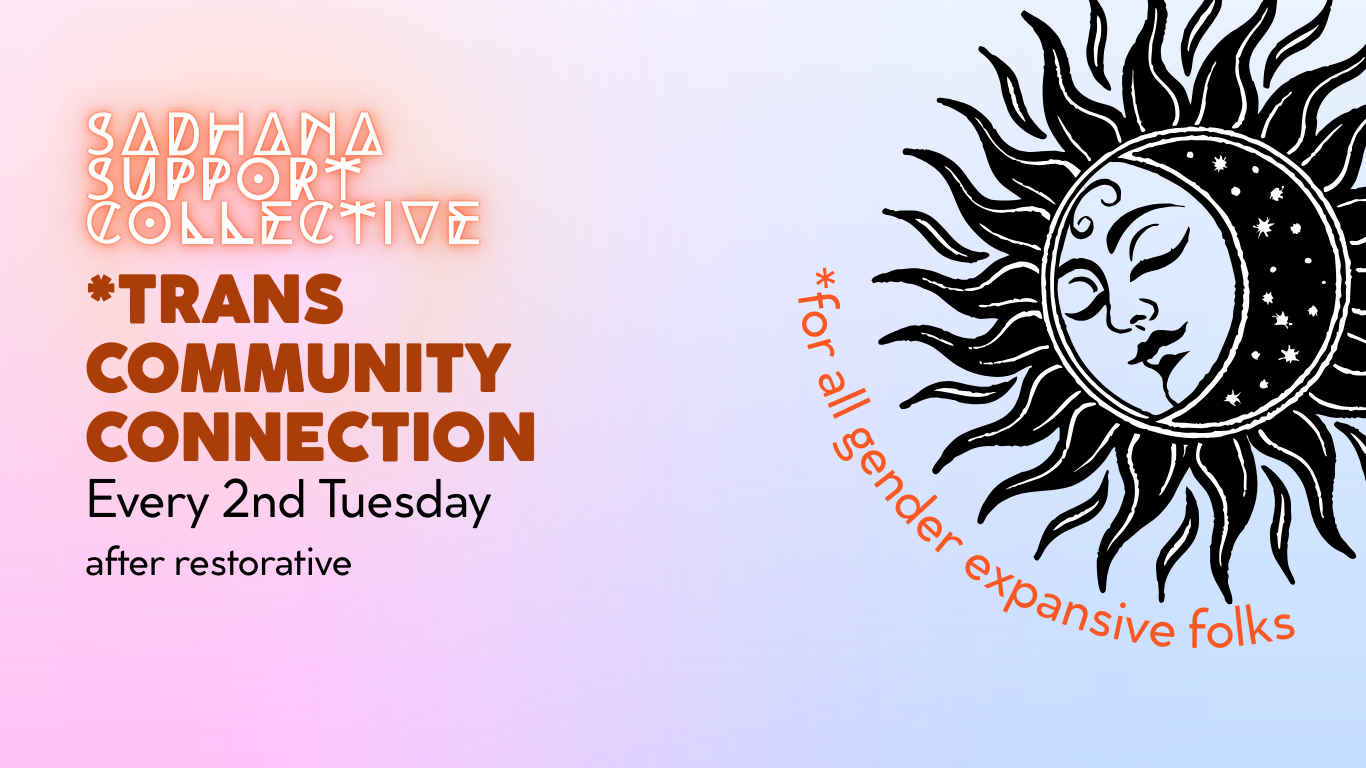
Banner for trans community connections for members of Sadhana Support Collective


Remember – you can easily tap into the goodness with me anytime. Drop in to a zoom class and enjoy being together live on zoom. Or, there’s literally over 1000 super sweet new on demand replays to help you re-root, relax, open up, energize, and feel better.

My books are open for private sessions, too.

This month’s in person Restorative Workshop at Bhava is sold out, but save the date for April 4th! Because of the high demand, we may shift that topic towards being a Restorative Workshop as well. Stay tuned!

SAVE THE DATE

I’m also offering a FREE online workshop: Better Posture as Self Love for Trans Folks and Their Friends, on March 31st.This fun, affirming workshop on Trans Day of Visibility will include a home practice sequence, cool anomy presentation, and the option to stay for Restorative class after.

Come explore a practical and illuminative framework for tadasana, how to stand tall and stable within our own selves, what gets in the way, and we will explore a simple sequence you can do to improve your posture, have less pain, better breath, and feel more confident and open in your chest. I’ll let you know as soon as registration opens!

April 1st, registration will open for my workshop in Denver, Oct 2, 3, 4th: Awake, Relaxed, Embodied. There’s a limited number of early bird spots. Plan to join us this fall, this will be an incredible weekend.

This article was shared via Avery’s newsletter March 6th, 2026.
Courage, Failure, Revolutionary Love: Come rest, honey, it’s a big time.

Courage, Failure, Revolutionary Love: Come rest, honey, it’s a big time.

This piece was published in my newsletter Feb 17, 2026, and so many folks wrote back appreciating its message. I want to make it available to everyone, so here it is. These themes are still relevant for our current times. Enjoy! And thanks for reading. – Avery

Come to yoga? Restorative Yoga with me on Tuesday evenings on zoom is a deeply relaxing way to resource your body, mind, and heart. It’s possibly one of the best weeks ever to come to class with me. Why? It’s a biiiig time. Maybe this is a week where some extra grounding, energy, mindfulness and embodied care might be just the thing.

The holy days are stacked, amongst them today’s Lunar New Year: we’ve shed our snakeskin and now a new path forward is revealed, awaiting our galloping hoofbeats and heartbeats! Today’s also an eclipse, not to mention this week’s other major astrology. Neptune and Saturn are changing signs, their forces are joining at 0° Aries. This has been called a ‘karmic reset.’

But you don’t have to tune in to the esoteric to know we are in a wild time of systemic disintegration, collapse, and change. It’s a time to take courageous aligned action; it’s also a time to rest. A time to prioritize the things that help you feel nourished and clear headed. These things are not a binary.

There’s an energy of coming together to meet what is arising, finding new ways to be in the movement of life. Humans are captivated by people who rise to do incredible things.

But we are also captivated by failure.

I have been moved, observing Olympic skater Ilia Malinin, and am curious why. Maybe we like to see others rise to greatness, but also are drawn to witness people’s failures because we long to see that we can strive to do something radically courageous, “fail,” and still be loved, still belong. Our wounds around exile and belonging run deep. To see someone take a big risk, and even when things don’t go the way they wished, that they can still be celebrated, loved, as all of it is taken into a bigger context of growth and exploration. I want that celebration and safety for you and me. And Ilia, of course.

This connects to the sacred risk of fighting the good fight for a more just, liberated world. The risk of believing it’s possible enough to live into it day by day, breath by breath.

Shoutout Jesse Jackson, rest in powerful peace. To witness such endurance of loving action, work, and the ripple effects of that willingness to continue to show up, stokes the fire in my heart. Tapas, to use the Sanskrit term.

“Life without tapas is like a heart without love.”

– BKS Iyengar

 I’ve been inspired by the courageous loving action of communities coming together to resist ICE in Minneapolis. I’ve been inspired by my students in class, making beautiful connections in their asana practice and how it’s empowering the good work in their lives.

I just returned home from co-teaching the Queer Couples Yoga Retreat in Taos, and my god, such a deeply gorgeous, inspiring time that was. Queer love is truly medicine for our world. The tender, brave, healing that unfolded – and the joy that this allowed – was something powerful to witness, something strong and real! (Insert your fave Heated Rivalry fan art here.)

Years ago Jack Halberstam‘s book The Queer Art of Failure illuminated new space for me. Maybe it’s worth failing, if it means we get to build new forms of success. Maybe this moment we’re in, and how our yoga practice can help us meet it, is like that. We can transcend the old limitations by orienting towards a possibility of love and liberation beyond what we could have previously imagined.

Maybe we can be OK with ‘failing’ at yoga – of what we think it should look and feel like – even as we continue to practice. And through that practice, new possibilities are revealed that wash away the old ideas of success, and reveal something so much better.

Maybe in being willing to fail, we become free to glimpse the bigger horizon. Perhaps that willingness to have courage, to continue to tend the garden of possibility in the world, our lives, our nervous systems – IS the true victory.

I am always working towards that capacity in my own work and life. With the creation of anything heartfelt, there’s always risk. It’s vulnerable and messy to create. And it’s so important.


How can we stay open to the dream and cultivation of new possibilities, happiness, peace, a better world, even as destruction and injustice the very fabric of what we know is real?


“We are the architects of our self-care… of meeting our own needs. We are the architects of our courage, which is a major part of how we take care of ourselves and each other.”

Chani Nicholas

Every time you get on your yoga mat to practice, you are investing in – and building in real time – the possibility that you can feel better, clear out of the old patterns, pain, and exhaustion, and gently shift the scattered mind towards clarity and calm.

Through this, you resource not only your own life, but your activism, art, generosity, your ability to stand for truth.

To practice yoga strengthens the muscle of faith, faith in ourselves, and in our ability to create positive change.

All of it – the beauty and challenges, the profound and the mundane – all are mediums for our liberation… if we choose to engage with it that way.

Maybe the practice is the re-membering…

In Sadhana Support Collective this month we’re working with sutra 2.1, kriya yoga, the yoga of action. Maybe all that presents itself…

  • is fuel for our tapas, our fiery devoted willingness …
  • is the material for insight, svadhyaya
  • is an opportunity to strengthen our faith and practice surrender, Ishvara pranidhana.

If you’ve been meaning to make more space in you life for yoga, come. Come to class this week. Drop in, or join Sadhana Support Collective. We’re exploring heart opening! We’ve also started a new Yoga Accountability Club in SSC. Come connect…

It’s never too late to explore being more embodied. It’s never too late to regain mobility, support your ability to breathe freely, and have a more open chest, more stable joints, a more compassionate relationship with yourself.

It’s never too late to build a better posture, through alignment and functional strength, which not only helps reduce pain and injury, but also directly helps you feel more confident and emotionally resilient.

Yoga alignment will help you stand tall, be more broad shouldered, and have more energy, since the breath and vital organs will have more internal space, ease, circulation, and nourishment.

If you’ve felt for yourself how your body, mind and emotions are connected, it will make sense why this in turn helps diminish heavy emotions, depression, exhaustion, and low self worth.

The source of courage and love is within you.

Sometimes a storm needs to sweep the river bed clear, so some new energy can flow. Your body is such a powerful entry point to decompression, and a fresh start.

 Remember – you can easily tap into the goodness with me anytime. Drop in to a zoom class and enjoy the accountability and focus that comes with being together live on zoom.

Or, there’s literally over 1000 super sweet new on demand replays to help you return to balance: energize, restore, awaken to the comforting clarity of embodied presence.

My books are open for private sessions, too.

Thanks for reading, and thank you for being here with me. I am envisioning you and everyone you love happy, peaceful, safe, and well.


Yoga & Scorpio Season Storytime: Nervous System Ghosts, The Psoas, Ancestral Healing, A Missing Pumpkin, Embracing Our Shadows & Light!

Yoga & Scorpio Season Storytime: Nervous System Ghosts, The Psoas, Ancestral Healing, A Missing Pumpkin, Embracing Our Shadows & Light!

A warm, cozy, eye twinkling smile to you in this autumn season, a rich time for practice. Here are some writings I’ve shared with my students, but I want to share with you, too.

We are coming up on Samhain, Halloween, and Dia de Los Muertos this week, and last week, there was Diwali. These are all distinct and different, and, my brain likes the draw connections between things…We’re also on backends week this week, which seems sort of perfect. 

Yoga art showing Avery in a backbend with marigolds, datura and moons.

Opening the front body can definitely relate to facing our fears. Backbends can be scary poses, but also exhilarating, empowering, and very healing, not only for the spine and our body but for our psyche and emotional being. However, they are often scary.

The back body relates to the subconscious, unconscious, and the unknown. In backbends, we expose our throats, heart, vital organs, genitals. Naturally, this is vulnerable! But as we turn towards what is scary, those things that frighten us lose their power. 

It shifts our relationship to what scares us when we explore it volitionally.

What can we compost? What are we releasing, like the leaves from the trees?

Asana practice can be a wonderful medium to turn towards our fears in a safe container of our own making. Then, perhaps the scary ‘out there’ is less overwhelming. Certainly, there’s scary stuff… whether we look to our intimate relationships, the news, and what’s happening in the world, or even in the patterns in our own mind. People dress up as scary things for Halloween; maybe this is a ritual of a similar sort. We turn towards the scary stuff and bring out of the closet, and in doing so it becomes less frightening. We try on new possibility and see what it feels like.

If we take this as a metaphor for inviting the ghosts of our nervous system out into conversation, then maybe we can see ourselves, our past ourselves, and even our ancestors with a little more compassion…connectivity. If we can hold the blame or shame we might feel for our problematic predecessors in a bigger, more compassionate context, then perhaps we can connect to the benevolent ancestors.

Backbends involve opening the psoas. If the psoas becomes dry and short, it contributes to tight hips, compression in your low back, and overstimulation in the adrenal glands, which relate to fear and anxiety.

Because of the connection between the psoas and our nervous system’s survival patterns, this work is often linked to ancestral healing.

When we work with alignment and compassion in specific asanas we can soften inherited patterns the affect us physically, psychologically, and emotionally.

We can offer this work as a healing gesture to those who came before, as well as those who will come after. Healing can send ripples into the future, and the past.

The dynamic of darkness and light…

Last week in class, inspired by Diwali, we explored inner illumination. But what is it to move from dark towards light, given that in the context of yoga we are already always whole? The invocation to the Isha Upanishad says there is a Divine wholeness that we are, and are part of: infinite and complete. Anything taken from it, or anything added to it, wholeness – purna – remains.

If we’re wanting to embrace all of our parts, is it even helpful to label some things as darkness, and some, light? As we move into Scorpio season and I invite exploring this work in the following way.

Many years ago I was in a yoga workshop with Judith Lasater, and she said ‘people think yoga is about love and light, but actually it’s about darkness and fear. It’s about bringing the light of our awareness in to what is in the dark.’

What we might consider darkness, you could also see as the kleshas: ignorance, egoic definitions of self attached to illusion, craving, aversion, fear. Maybe we throw in things like shame, unworthiness. Whatever it is that makes you feel stuck, isolated, alone.

I like to think of these things as also light, but parts of our Divine spark that have been exiled, removed, fractured, and are ensconced in a cloak of shadows, so that we do not recognize these tender aspects as parts of our wholeness.

Part of what makes us shine.

What are the things inside you tend to hide, blame, wish would go away? These tender complexities are not the source of your suffering, but pushing them away can contribute to it.

As we get in touch with our shadow materials, we can discover these are actually powerful parts of our brilliance, our gift, and how we shine. BKS Iyengar described integration as “a process of returning the fragmented parts to the whole.”

Is that not what we are doing in asana?

You go in and feel what has been subconscious. You bring awareness to the parts of your body that have been on auto pilot: compressed, gripping, slack, unaware. You spread your somatic sensing to feel the various parts and layers with specificity, curiosity, and care. You invite breath and hydration to what has been clenched. Where you used to be out of body and out of touch, you become sensitive, embodied, and through that, you feel more whole and alive.

You get to experience the radiance that was always there, shining from within.

Perhaps exploring our shadow parts as fragments of our Divinity, aspects of our light wanting to return home, means they become less scary.

The remnants and ghosts lurking in our nervous system and mind that used to haunt us can become doorways to loving and knowing ourselves, and our tender honest humanity.

This to me is a wonderful motivation to practice yoga.

If you come to your practice not as a chore of self improvement, but as a way to intimately excavate the deeper layers of who you are and what gives your life meaning, how might change how you practice?

Does it feel good to practice because we free ourselves from tension and fatigue, or because we free ourselves from the illusion that we aren’t already whole, lovable? Maybe these are one in the same.

Of course, going in to feel and heal can be scary. It requires commitment, showing up – abhyasa – and also vairaghya, letting go.

Here’s a story about letting go…


Last spring, a car smashed off the road through my yard during a police chase, and I decided I needed to make a protective barrier. So I built up a round berm with a low wall, and planted a bunch of herbs and a three sisters garden. I threw in all sorts of seeds that didn’t fit in my other garden beds, including pumpkin seeds a friend had gifted my daughter, which unexpectedly thrived and grew all over, sending their strong spiraling tendrils around everything within reach.

Near the front sidewalk, one HUGE pumpkin slowly grew over the summer. It got round as a beach ball and bright orange. Then someone stole it, and I was so sad. I had grown attached to it, and the way it connected me to my neighbors; the toddlers walking by would pat it in delight, and older folks would smile and comment “what a fine pumpkin.” As a gender-weird person, sometimes interactions with people I don’t know are unkind or awkward, and so I appreciated how this pumpkin seemed to be a connector.

What could I do? Let it go. Hopefully whoever took it got some joy from it as well.

What I didn’t realize is that once that huge pumpkin was picked, the same plant popped out FOUR more pumpkins, which are now nearly as big as the first!

The big pumpkin needed to be picked to stimulate that growth.

I’m sharing all of this with you of course, because I’m guessing there may be a big pumpkin in your life, too.

Something gone, whether you wanted it to go or not.

But maybe in this harvest season you are realizing some unexpected growth, or blessing, or abundance that has come from this loss.

Yoga art showing Avery in a backbend with marigolds, datura and moons.

These moments can be tender, but are also moments to practice surrender to something greater…to something Sacred.

I invite you to be with this practice this week.

Be on the treasure hunt, what is growing within you, in the places where what used to be is now uncluttered and open?


What shadows are ready to come home to the warm bright hearth fire within your own heart?


May your yoga practice strengthen your faith in your own process of healing and growth. And faith in the Universe, too.

If you’d like to explore some of this work, there are some wonderful on demand classes available where we explore these themes! Check out the replays from this month.

In Albuquerque, I’m also teaching a worlshop this weekend:

Thanks for reading!

5 ways Yoga Asana Can Help Regulate Your Nervous System Safely and Effectively

5 ways Yoga Asana Can Help Regulate Your Nervous System Safely and Effectively

What is the nervous system and why should you care if yours is regulated?

Whew… Where’s the pressure release valve? From climate crisis to rising fascism, our world is becoming increasingly complex and stressful in ways that we feel directly in our sensitive, intelligent minds and bodies. With so much beyond our control, it’s easy to feel overwhelmed and exhausted. However, so much of how we experience reality, whether in the form of our thoughts, or sensations in the body, depends on our nervous system. We can cultivate regulation in our nervous system through accessible, simple practices, which hugely impact on how we feel, think, and experience life.

Nervous system regulation helps us feel less pain and anxiety, sleep and rest better, feel mentally clear and allows us to experience healthy pleasure, connection, and safety. This in turn can help us feel more agency, and empowered when facing a quickly changing and unstable world.

Skillful yoga practice is one of the best tools for nurturing nervous system regulation. 

Avery Kalapa, trans Iyengar Yoga teacher in parivritta trikonasana.


What’s the Nervous System?


The nervous system communicates messages between the brain and the rest of the body. 

There are two main subdivisions: the central nervous system and peripheral nervous system. The CNS includes the brain and spinal cord, poetically described by Guruiji BKS Iyengar as an inverted tree, with the roots in the brain, and the branches spreading down through the body. It integrates incoming sensory input and responds. The PNS includes sensory and motor receptors; the motor division includes the voluntary, or somatic, and the involuntary/ autonomic nervous system. Here, parasympathetic and sympathetic modes function as a two ends of a spectrum. 

The nervous system defaults to the known, but is also highly adaptive. 

QTBIPOC students in yoga at a retreat relaxing on yoga props in a restorative class.

Wellness relates to balance between sympathetic and parasympathetic.


The sympathetic nervous system causes being awake, taking action. The sympathetic nervous system controls a whole host of wonderful things without us thinking about it – heart rate, blood pressure, digestion, and more. Centered in the adrenal glands, which kick on during stress/danger; it gives us a burst of energy to fight or flight to safety. However, the brain can’t discern real danger from imagined, and in our modern world of abundant stimulation, screens, stress, and trauma, the sympathetic nervous system is often overactive, which causes anxiety, insomnia, and increased cortisol (fear hormone) which deteriorates the body. When responding to danger, biological replenish/repair cycles are paused. 

The parasympathetic nervous system, or “rest and digest” mode, brings relaxation, rest, safety. Cellular respiration increases; the higher levels of CO2 in the bloodstream in turn calm the brain. Generally, most folks benefit from practices that increase the parasympathetic response. However, too much parasympathetic is also problematic. This can look like dissociation, freeze or fawn response, or depression. 

Think of a pendulum swinging back and forth: we want a smooth, steady combination of sympathetic and parasympathetic response. This helps us feel alert and energized, yet restful and relaxed. 

Non-binary trans yoga teacher Avery Kalapa in an accessible trauma informed yoga pose that is good for back care and nervous system regulation.

Dysregulation shows up as:

  • anxiety
  • depression
  • insomnia
  • overwhelming emotions 
  • inflammation and physical pain 
  • feeling chronically unsafe, which weakens our discernment around who or what is actually dangerous 
  • distorted thinking 
  • gender dysphoria 
  • dissociation, being out of body 

Regulation helps with hormonal balance, digestion, immune health, and every vital system in our body. Because bodies seek balance, if there’s one extreme, the pendulum will often swing in the other direction too: people with anxiety often also have depression. 

The goal is to reach a place of regulation: a harmonious, sattvic state between sympathetic and parasympathetic function. 

Nervous system regulation isn’t a quick fix; it’s more like a garden that needs ongoing nurturance and tending. Many aspects of yoga involve simultaneously stimulating and calming our nervous system; this intelligent approach is much more helpful than thinking of regulation as a binary of “uppers” and “downers.”

Gaining fluency in how to regulate your nervous system is a key component for how yoga works as an effective healing modality. When we work at the level of the nervous system, yoga effectively disrupts body-brain patterns, disarms trauma and epigenetic survival mechanisms, and frees us from internalized social conditioning: personal and collective samskaras (karmic patterns).

Consistent yoga practice can be very effective, when practiced in specific ways.

Asana offers a myriad of ways to regulate. And, yoga “off the mat” includes additional ways to tend the garden of a balanced, regulated nervous system. Below I go a bit deeper into 5 key ways of working, but here’s a quick list of ways yoga can help:


  • feeling sensations
  • observing multiple different sensations at once
  • breath awareness: feeling passive, effortless breath in the body
  • increasing back body breath and thus adrenal circulation to pacify the sympathetic nervous system
  • extending one part of the body actively, while simultaneously relaxing another area; extra credit for feeling both at one time
  • feel your body in contact with the floor, wall, or a prop
  • deliberately moving awareness to various things in and around you
  • softening your tongue, jaw, belly, pelvic floor

You can do the above in asana, and throughout the day. Here’s some additional “off the mat” ways to help. These won’t work for everyone; see what works for you:

  • create routine and regularity with when you eat and sleep
  • reduce or take delibrate “fasts” from screens
  • seeting boundaries and honoring them
  • time in nature, being present with nature
  • asking for support 
  • interupt small harms, such as being misgendered
  • gardening, pruning, physical work with plants
  • imaginative play, crafts, or story telling games with kids (or inner children)
  • creative art or expression that prioritizes process over product
  • schedule gaps between events, meetings

Passive restorative poses may be too confrontational and agitating if someone with a trauma history is trying to relax. Standing poses against a wall can be grounding and help people orient in space, especially good if disassociation is present.

There are particular poses and breath techniques that help, but HOW you practice is just as important as what you practice. 

Avery Kalapa practicing a yoga pose named Halasana outside in New Mexico.

Here are five ways to work in yoga asana that can lead to subtle but powerful shifts in your nervous system:


1.  Notice sensations in your body. Practicing yoga asana can be a path to get you into your body and out of your head. Notice how sensations change over time. Spread awareness to feel two different sensations at the same time – for instance, sense your thigh muscles working and at the same time relax your jaw. 

Embodiment is powerful, particularly when two key components are in place. First, it helps to have clear, direct, doable instructions. There’s a trend in trauma informed yoga now to emphasize permission, and “doing whatever feels good.” However, if someone is out of their body or anxious, too much choice can create more anxiety, and make you feel stuck in your head, unsure of what to do.

It can be supportive and calming for a teacher to give direct instruction. But, secondly, it is also important to be in a space that uplifts one’s agency, in which you know you have permission to opt out. It’s important to consent to being led in any given asana. Classes that are too strict can exacerbate nervous system patterns signaling a sense of powerlessness. Strictness can inspire rigor, alertness and actually, care when used skillfully. But some teachers overdo it, and it feels like an environment of shame and assimilation. However, it’s unhelpful if things are too permissive and casual. 

The right combination of discipline, compassion, agency can build trust and create conditions where a teacher can help the student break free form old patterns in how they move and think, which is very healing on the level of the nervous system. Explore different teachers and methods to find what works for you.

  1. Be aware of your breath. Learn to feel the breath in your body. Just noticing your breath as it is without trying to change it sends a powerful message to the nervous system that you are safe. Full, free breathing is one of the best things you can do to regulate your nervous system. Alignment-based asana restructures the body, removing obstacles to the breath and allowing you to breathe better. 

Importantly, I’m talking about bringing attention to your breath in the context of yoga poses, rather than doing breathwork (pranayama). The breath has a very powerful effect on how we feel, but because of this power, it’s a bit like playing with fire. If you’re unskillful or aggressive in an asana, you might strain a muscle. But if you are aggressive or unskillful in working with breath, you might stir up a lot of psychological suffering. 

Working with the body is a relatively safe and accessible way to feel better. And it can prepare you to safely explore beautiful healing practices such as pranayama.

3. Realign your body. 

Alignment-based asana can decompress your spine, unload the nerves and vessels, soften the organs, create more space for the lungs and diaphragm, increase circulation to the organs and brain, and more. An attention to alignment will also help you protect your joints and increase your stability in asana.

And while functional alignment is great for reducing pain and injury in the physical the body, it is also the key to shifting the patterns in our emotions and mind. Alignment reorganizes how energy moves through the nervous system. This reorganization of energy is how asana can tangibly change the patterns to create new possibilities not only in your body, but also your mind. As we learn to be “in” our bodies, we increase our ability and capacity to feel safe. 

4. Balance your hormones. The endocrine system (hormones) and nervous system are deeply entwined. For example, in response to stress, the nervous system will kick into fight, flight, or freeze in the immediate moment, while the endocrine system will release cortisol, which will affect the body for longer.  

Certain asana help to powerfully and effectively regulate hormones. Not only can specific poses stimulate or calm hormone-producing glands, but a daily practice can over time reduce the production of stress hormones.  To calm the sympathetic, supported forward extensions like uttansana and ado mukha virasana are quieting, especially with head support, so the brain, eyes, and temples can soften. 

Chest openings for easier diaphragmatic movement and breath, such as supta baddha konasana (below), can be powerfully calming.

Avery Kalapa, a trans Iyengar yoga teacher, in reclined bound angle pose, or supta badha konasana: a restorative pose for nervous system regulation and pelvic health.

Halasana with a bench or chair supporting the root of the thighs is one of the best parasympathetic inducing poses. Any sarvangasana variation is excellent, but this is especially restful: the combination of backbody breath, jalandhara bandha position, circulation to the brain, and restful, passive decompression creates a very soothing effect. Emphasis on softening the jaw, tongue, eyes, brain with exhalation helps connect to consciously letting go. 

Observe with distance. Learn to be the “seer, not the seen.” Patanjali’s Yoga Sutras describe how we tend to identify with what we are seeing, thinking, or feeling, and through that process, get enmeshed with our experiences. Embodied yoga practice can help us connect to a deeper part of ourselves – the source of awareness. We can learn to create space between ourselves and our thoughts and emotions. We can experience them, but know that they are not us. This shift in perspective increases our capacity both to stay grounded and patient during discomfort and to be intimately present during moments of healthy pleasure and delight, which strengthens our resilience. 

This distance can paradoxically also help us feel our feelings! In life, most of us tend to avoid ‘bad’ feelings, but this avoidance can trap unprocessed events within ourselves, leading the nervous system to enact the same patterns over and over.

Through yoga practice, we are able to integrate and metabolize uncomfortable feelings such as grief and pain, and through that process, shift and release them.

This process of somatic integration frees us to be more attuned and responsive to what’s happening within and around us, and ultimately, more happy, healthy, and secure. 

Interested in experiencing how yoga can help you access nervous system regulation?

2 warm invitations:


Join us this April for a week long Yoga Retreat centering nervous system regualtion in a myriad of ways! Yoga, rest, community, play, crerative experession, and more.

SPRING YOGA RESET RETREAT

with Avery and Luke

Mazunte, on the Oaxacan coast of Mexico
APRIL 6-12, 2025

Check out all the juicy details here. 


Come to class! Join a zoom yoga class or on demand practice with Avery. Your first class is FREE!

You can filter on demand classes by searching for “nervous system regulation” in my on demand library. 


trans Iyengar Yoga teacher Avery Kalapa

About the Author:

Avery Kalapa (they, them) CIYT ERTYT500 YACEP is a trans yoga teacher with over 25 years experience in yoga. They run a thriving, online Yoga School called Sadhana Support Collective that offers awesome classes and inclusive healing community. Drop into class, first one’s free! 

Self-Worth & Trans Healing: 5 Ways to Make Your Gender-Affirming Yoga Retreat Dream a Reality!

Self-Worth & Trans Healing: 5 Ways to Make Your Gender-Affirming Yoga Retreat Dream a Reality!

This article was originally published for Gender Wellness LA,  genwell.org.

“Trans, non-binary, and gender diverse people deserve affirming spaces for healing and rest.” Ok, you can probably agree with that.

But how about this…

“You deserve to go on a yoga retreat.”

…Did I just make you cringe?

I see you out there, uplifting and donating to everyone’s mutual aid, bringing meals to friends post top surgery, but struggling to find even a LITTLE time and money for your own much needed self care.

Many trans and queer folks, especially those who hold other marginalized identities too, feel they don’t deserve something as “extravagantly” nourishing as attending a yoga retreat. They feel as though they don’t deserve investing time and money just on themselves, even on an experience that would deeply replenish their capacity, help them finally make important positive changes in their life, and nourish all the ways they are showing up.

peach and black toned image of trans yoga teach Avery Kalapa in an illustration about pratyahara yoga philosophy

Many of us carry a self-worth wound. This isn’t our fault. It makes sense in a society that shames queer folks, and tells trans people they are a problem, a burden, or worse, that they are not real. Combined with the pressure of productivity and capitalism, it’s common to feel that for every good thing we receive, even small bits of kindness, support, or help, creates a debt.

We do not have to constantly give back in order to ‘deserve’ to exist.

Feeling this way keeps us vulnerable to overworking and running ourselves ragged. It depletes our bodies, relationships, and the causes we care about. It gives momentum to the wheel of capitalism, burn out, scarcity, and isolation. And it can make the practical steps towards even basic self care, much less going on a yoga retreat, feel overwhelming.

peach and black toned image of trans yoga teach Avery Kalapa in an illustration about pratyahara yoga philosophy

Yoga can be profoundly healing, but sadly many wellness spaces – much less retreats – are not welcoming to trans and gender nonconforming (GNC) people.

In addition to basic access hurdles like cost, the pressure to assimilate, risk of overwhelming dysphoria, and the courage to explore getting present and actually IN your body are very real barriers, too.

This is tragic, because for me and many of my students, practicing yoga’s embodiment and philosophy has been a primary source of strength, gender euphoria, and an essential lifeline in challenging times. As a trans yoga teacher with over 2 decades of experience, I can honestly say I’m not sure I’d be alive without yoga’s precious practices.

I’ve seen trans and GNC experience huge benefits from yoga, especially when they attend an immersive experience like a queer and trans yoga retreat. I’ve witnessed how a retreat space that is actually safe, affirming, and full of care combined with deep healing practices empowers people. I’ve witnessed folks get sober, finally start HRT, apply for grad school, leave an abusive relationship, come out to their family, start their business, get a grant for a trans film project, and many more beautiful things.

Yoga isn’t about fixing anything; we are not broken. But it does help people be, and love more fully, unapologetically who they are, which has huge ripple effects in their communities, and beyond.

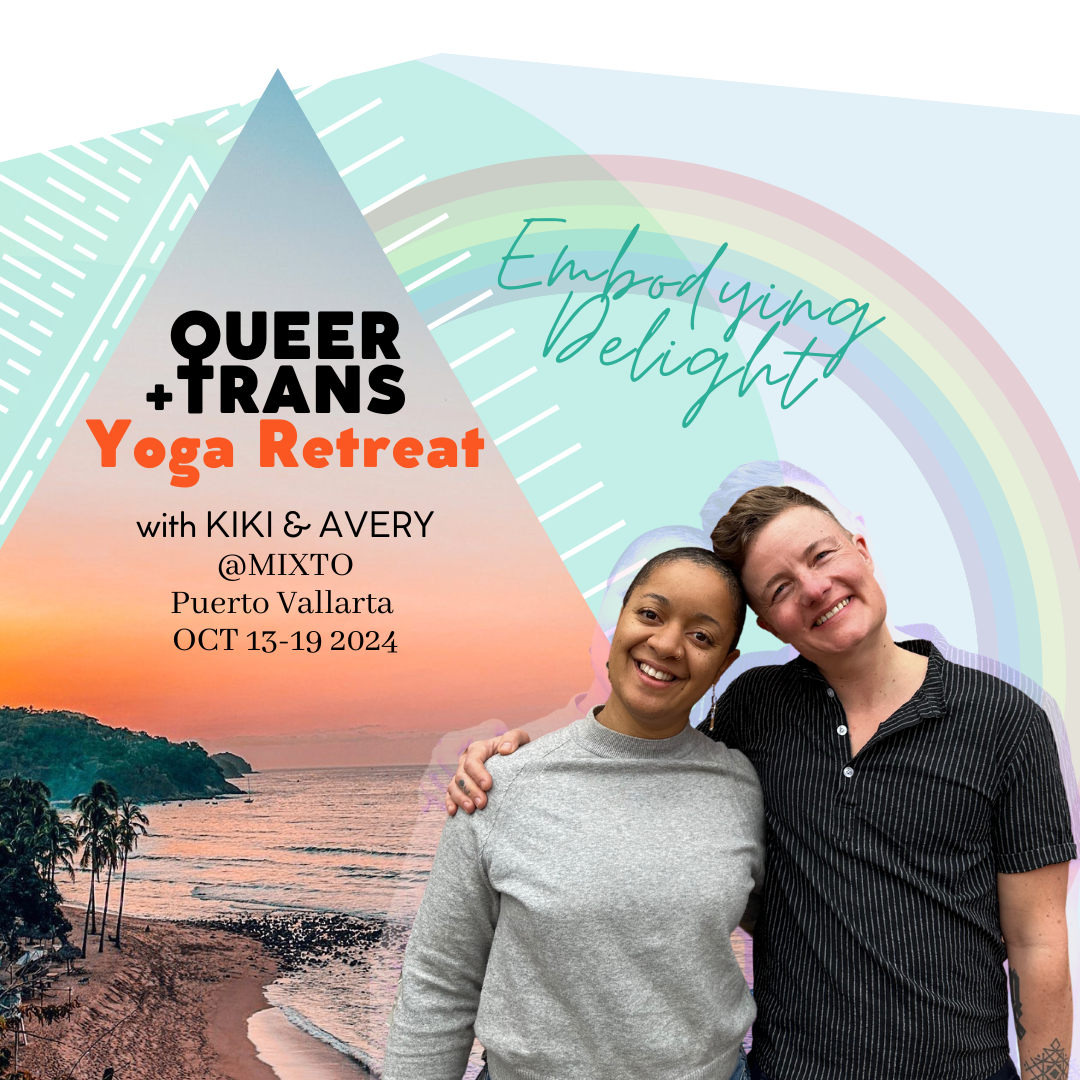
Avery and Kiki's Queer Trans Yoga Retreat banner for Baja Mexico 2024

Would you ever want to attend a trans & queer yoga retreat? Here are five ways to break down avoidance, get past the cringe, and move toward experiencing your dream:

  1. Act as if you are going. You don’t have to say: “I’m doing this,” but go through the steps as if you are. Get your passport. Regularly look at flight deals. Put it on your calendar. Arrange time off work.
  1. Start gathering your resources. Set up an extra savings account or a hidden envelope with cash. Squirrel away a set amount each month towards attending a retreat. Try applying for a scholarship. (Yes, you deserve it just as much as anyone else!)
  1. Ask others for support. Ask friends and family to contribute towards your retreat as their gift to you this year. Birthday gifts, graduation gifts, they-love-you-and-you-need-healing gifts. You’ll be amazed how much joy it brings others to give to you! Practice receiving without feeling like you have to give anything back, and trusting the Universe wants you here. This is part of yoga.
  1. Get creative. You probably won’t find “go on a queer retreat” in any employee benefits package. But healthcare plans, employers, schools, and other institutions often offer support for preventative healthcare, continuing education, professional development, and more. What could be queerer than repurposing institutional policies to get the support you actually desire?
  1. Say it out loud. When you’re ready, start talking about the trip out loud. Tell close friends who you think would support the idea. Talk to the retreat leaders. Get support in working through your fears and scarcity-mindset. You are not alone!

By the time folks make it to our retreats, they’ve almost all gone through some Underworld journey around their own self-worth to make it happen. This itself is a radical healing process. It’s a chance to clear outdated stories about self-worth and what’s possible.

epic queer joy at Avery's yoga retreats

Investing in your health and happiness is a brave stretch. Give yourself permission to untangle the inner knots, to relax and awaken to a deeper authentic expression of who you are. In doing so, you create space for that journey for everyone around you. We will affirm each other’s worth and wholeness when we gather together for play, healing, and joy!

It’s OK to want what you want. And if that includes going on a retreat, you are so worth the work it will take for you to get there.

You deserve every good thing available to you in this wild and heartbreaking world.

Opening to receive can be a practice, and like any new strength, we build our ability to soften, relax, and receive care and support little by little.

May you be affirmed on your path of unconditional worthiness. Existence truly would not be complete without you here.

Mixto yoga studio space for trans and queer affirming yoga

Interested in joining our next QUEER TRANS YOGA RETREAT, October 12-19th at Mixto, south of Puerto Vallarta Mexico?


Applications are open, and QTBIPOC scholships are available! Check out the details here, orate the leap and apply now!

About the Author:

Avery Kalapa (they, them) is a trans yoga teacher with way too many certifications, a community weaver, and 2SLGBTQIA+ wellness advocate with over 25 years experience in yoga. They run a gorgeous online trans and queer centered Yoga School called Sadhana Support Collective that offers awesome classes and healing community. Drop into class, first one’s free! They also collaboratively organize Queer + Trans Retreats in the US and abroad. 

Special thanks to editing help from D Scott. 

Learn more about the next retreat OCTOBER 13-19, 2024 Embodying Delight QUEER & TRANS YOGA RETREAT with Kiki and Avery. Applications are open!